Capital, wind-down, accountability. One record.
Own funds, wind-down planning and safeguarding responsibility for UK payment and e-money firms, built from the same verified figures and signed off and locked.
Capital
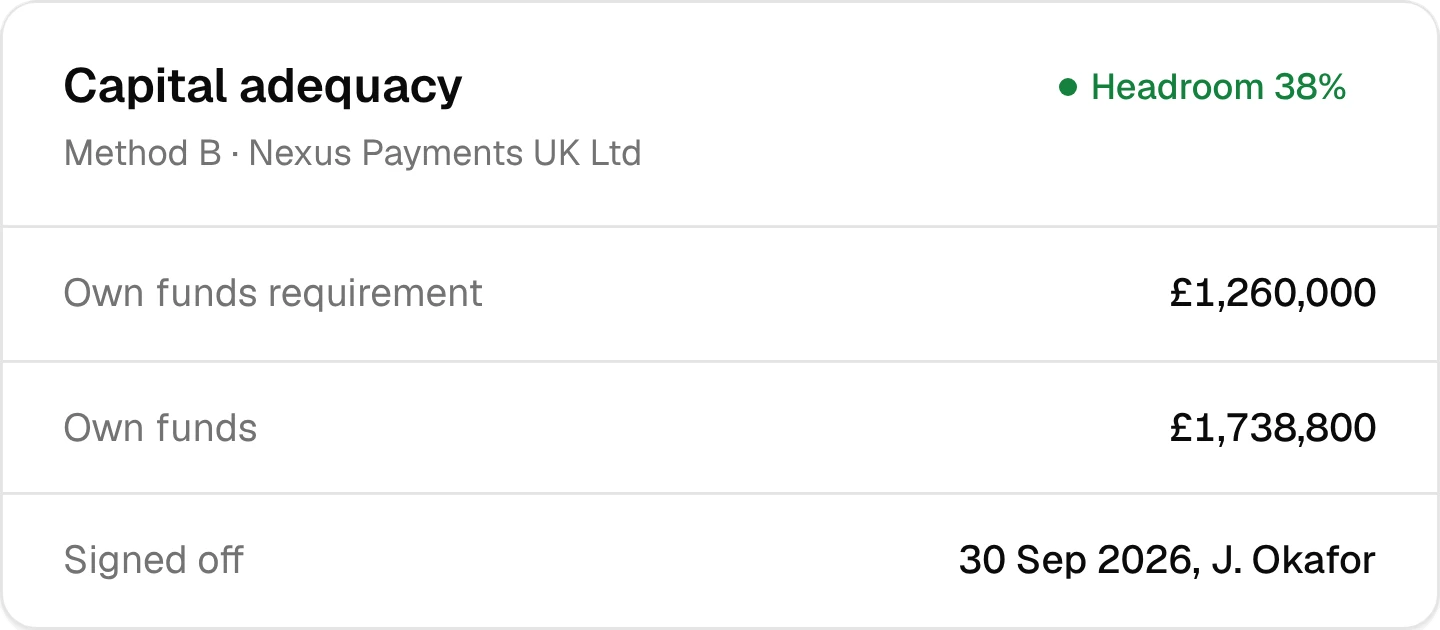
Capital adequacy.
Own funds requirement worked out by the FCA's method for your firm.
Headroom against the requirement, at a glance.
Signed off and locked.
Wind-down
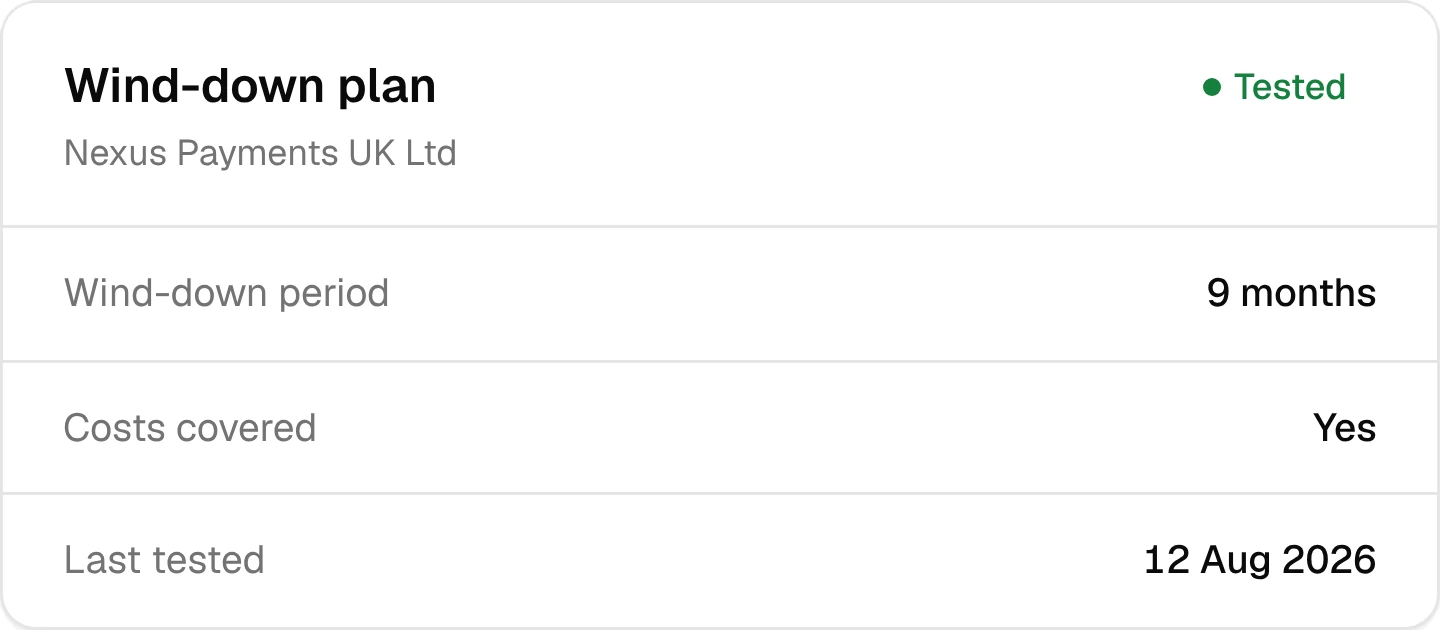
A wind-down plan that is tested.
Inputs and triggers kept current.
Costs, cash and capital tested against the plan.
A step-by-step playbook, signed off by a senior manager.
Responsibility
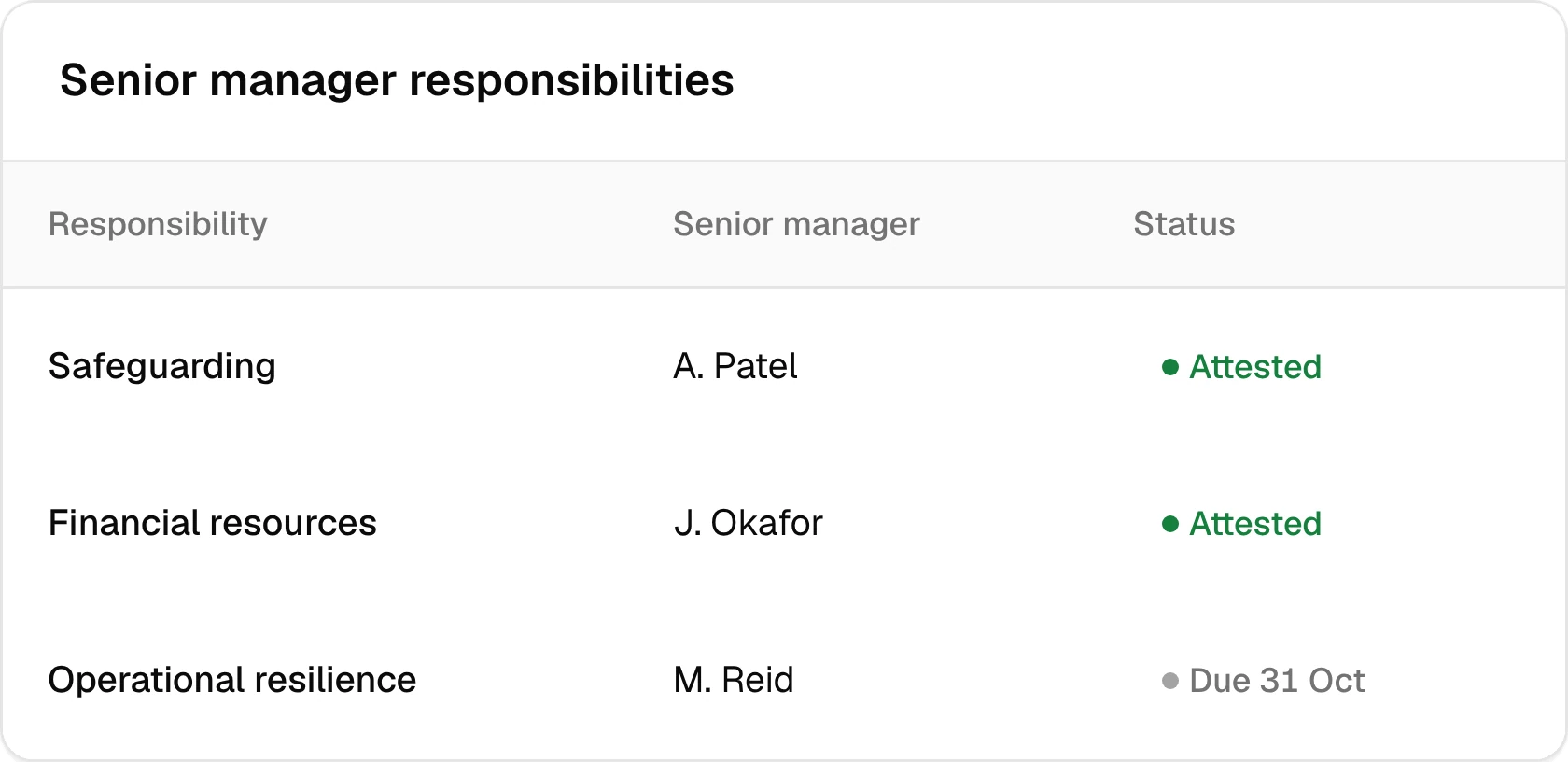
Safeguarding responsibility.
The named responsible director for safeguarding.
Attestations on a schedule.
Handovers recorded when the role changes.
Questions.
Who are these modules for?
UK payment institutions and e-money institutions, alongside the safeguarding work in Reconcile, Investigate, Forecast, Act and Report.
Which capital methods are supported?
The own funds requirement is calculated under methods A, B, C and D, with headroom shown against own funds.
How does the wind-down plan stay current?
Its inputs and triggers are kept with the rest of the record, and costs, cash and capital are tested against the plan before a senior manager signs it off.
What is locked?
Each signed capital period, wind-down plan and safeguarding attestation is locked with a unique code, so any later change shows.
Guides.
All guidesThe Safeguarding Resolution Pack: What CASS 10A RequiresA safeguarding resolution pack holds the records CASS 10A requires payment and e-money firms to keep, retrievable within 48 hours of an insolvency appointment.Read guide Who Is Responsible for Safeguarding at Board and Senior Manager Level?CASS 15.2.4R requires one director or senior manager of sufficient skill and authority to oversee safeguarding compliance and report to the governing body.Read guide